
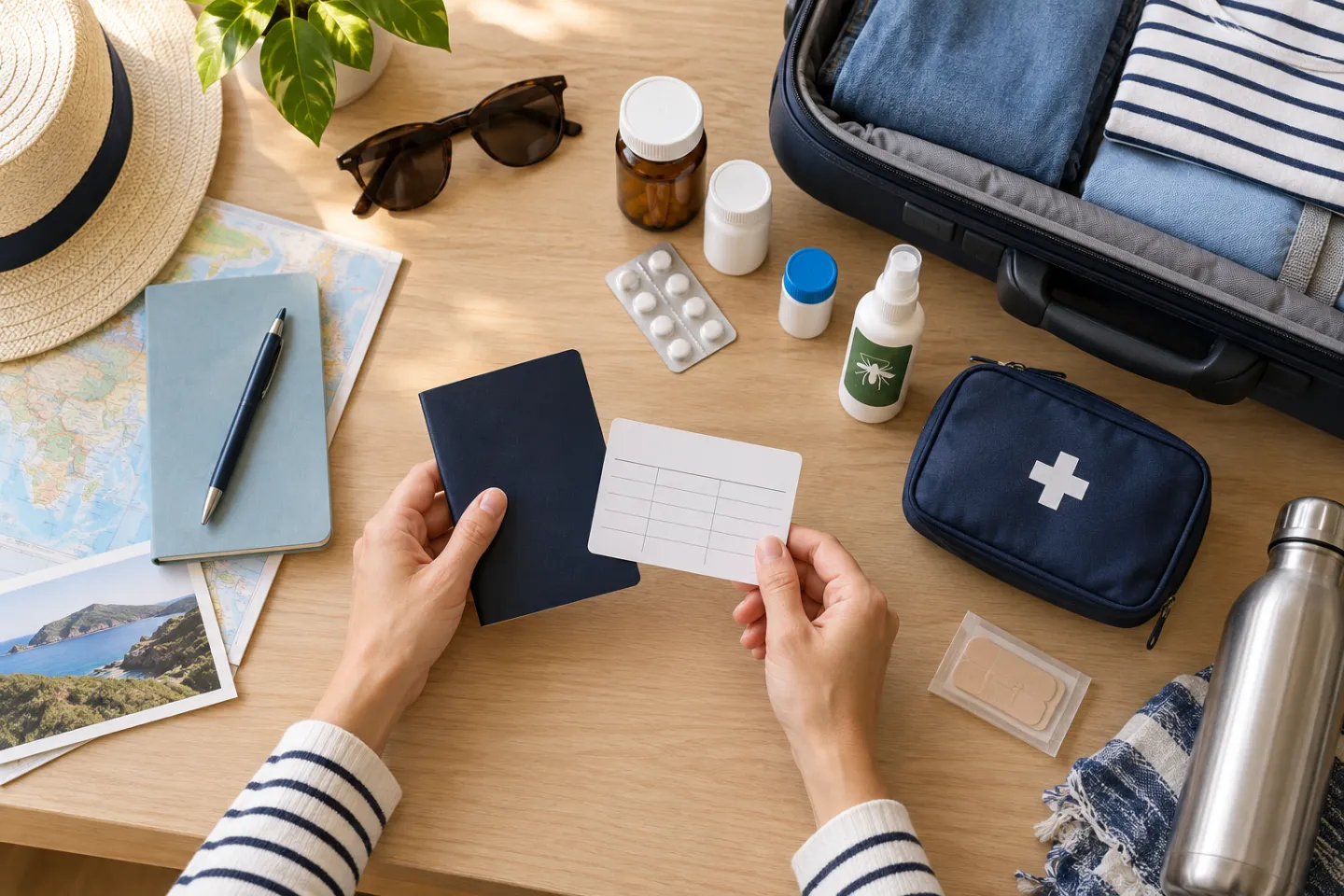
Travel planning usually begins with flights, accommodation and what to pack. Health planning deserves a place near the top of that list. Vaccine schedules, medication rules and destination risks can require weeks of lead time, and the advice for a city hotel may differ from the advice for rural fieldwork in the same country.
A pre-travel consultation does not remove every risk. It helps you identify the risks that can be reduced and prepares you to respond when illness, injury or disruption occurs far from home.
Start early—but come even if departure is close
The Government of Canada recommends consulting a qualified travel-health provider or clinic preferably at least six weeks before travel. Some vaccines need multiple doses, and immunity takes time to develop. A prescription may also need a trial or specific start date.
If your flight leaves sooner, a late consultation can still help. Some vaccines provide value on short notice, and advice about food, mosquitoes, medication and insurance does not require weeks. Do not abandon preparation because the ideal window has passed.
Build a detailed itinerary
Bring more than the destination country. Include:
- every country and stopover;
- exact travel dates;
- cities, rural regions and border areas;
- hotels, private homes, camps or ships;
- planned work, volunteering or healthcare contact;
- animal contact, hiking, freshwater activities or caves;
- high-altitude locations;
- visits to friends and relatives; and
- side trips that are possible but not confirmed.
Disease risk can vary by region and season. A transit stop may also matter when entry rules depend on where you have recently been.
Separate entry requirements from health recommendations
Some countries require proof of a vaccine under international or national rules. Other vaccines are recommended because they protect the traveller but are not checked at the border. These are different questions.
Yellow fever is a well-known example where an official certificate may be required in certain circumstances. Only designated centres can provide some documentation. Requirements can change during outbreaks, so check official destination advisories close to departure.
Do not rely solely on social media, a travel agent or an old blog post. Use the Government of Canada’s Travel Advice and Advisories and the embassy or consulate of the destination.
Update routine vaccines first
Travel can expose people to infections that are uncommon in Canada but still prevented by routine vaccines. Review measles, tetanus, diphtheria, pertussis, polio and other age-appropriate protection. Seasonal influenza and COVID-19 vaccination may also be relevant depending on timing and destination.
Bring written records. If documentation is incomplete, a clinician can discuss catch-up options. Most interrupted vaccine series do not automatically need to start over, but the correct plan depends on product, age and previous dose dates.
Travel-specific vaccines
Recommendations may include hepatitis A, hepatitis B, typhoid, yellow fever, meningococcal, Japanese encephalitis, rabies or other vaccines. Not every traveller to a country needs every vaccine.
The decision considers trip length, season, food and water access, rural exposure, animal contact, health history, pregnancy and immune status. A short resort stay and a six-month rural placement create different risk profiles.
Travel vaccines and consultation fees are often not covered by OHIP. Ask about product availability, total series cost and private insurance before the appointment.
Malaria prevention is more than a pill
Malaria risk can vary within a country. The clinician looks at exact regions, time of year, trip style and current resistance information before recommending medication.
Several preventive medicines exist, and each has advantages, contraindications and a different schedule before and after travel. Pregnancy, kidney function, mental health history, interactions and age can influence the choice.
Medication does not replace mosquito precautions. Use an effective insect repellent, wear long sleeves and trousers when practical, choose screened or air-conditioned rooms and use an insecticide-treated bed net when needed.
Fever during or after travel to a malaria-risk area requires prompt medical assessment. Tell the clinician where and when you travelled, even if the trip was months earlier.
Prevent mosquito and tick bites
Mosquitoes can transmit dengue, chikungunya, Zika, yellow fever, Japanese encephalitis and other illnesses. Many have no preventive medication for typical travellers, making bite avoidance essential.
Apply repellent according to the label, including age and pregnancy directions. Sunscreen generally goes on before repellent. Treat or purchase clothing and nets as recommended, and remove standing water around longer-term accommodation.
Ticks can transmit infections in many destinations, including within Canada. Wear suitable clothing, use repellent, perform full-body checks and remove attached ticks promptly with fine-tipped tweezers.
Food and water habits that are realistic
Travellers’ diarrhea is common. Risk depends on food handling, water sanitation and local conditions, not how luxurious a restaurant appears.
Choose food cooked thoroughly and served hot. Be cautious with raw seafood, undercooked meat, unpasteurized dairy and food held at room temperature. Use safe water for drinking and tooth brushing where tap water is not reliable. Ice is only as safe as the water used to make it.
Handwashing is best when available; alcohol-based sanitizer is useful when hands are not visibly dirty. Pack oral rehydration salts. Ask whether you should carry a specific treatment plan rather than taking antibiotics casually for every loose stool.
Blood in stool, high fever, severe abdominal pain, dehydration or persistent symptoms requires medical care.
Manage regular medication before departure
Bring enough medication for the trip and a reasonable delay, when permitted. Keep it in its original labelled packaging in carry-on luggage. Checked bags can be lost or exposed to damaging temperatures.
Carry a medication list using generic drug names, doses and the reason each is taken. A brief clinician letter may help for injectable, controlled or specialized medicine, but it does not override destination law.
Check embassy guidance for controlled substances, stimulants, opioids, cannabis products and syringes. A legal Canadian prescription may be restricted elsewhere. Arrange refrigeration and security for insulin, biologics or other temperature-sensitive products.
Do not combine jet-lag remedies, sedatives or motion-sickness drugs without checking interactions and driving warnings.
Plan for chronic health conditions
People with diabetes, heart or lung disease, seizure disorders, immune conditions, severe allergies or pregnancy need individualized planning. Consider time-zone changes, medication timing, access to safe food, altitude, heat and the availability of medical care.
Carry essential supplies in more than one secure place when possible. Wear medical identification if appropriate. Share an emergency plan with a travel companion, including how to use an epinephrine auto-injector or rescue medication.
If the condition has recently been unstable, discuss whether travel should be modified rather than assuming that insurance will cover a predictable complication.
Buy insurance you understand
OHIP offers limited or no protection for many costs outside Canada. Medical evacuation can be extraordinarily expensive. Buy travel health insurance and read the exclusions.
Disclose pre-existing conditions accurately. Ask about stability periods, pregnancy, adventure activities, mental health, alcohol-related incidents and trip duration. Save the emergency assistance number offline and understand whether the insurer requires authorization before non-emergency treatment.
Carry a payment method because some facilities require payment before an insurance claim is processed.
Prepare a compact health kit
The first-aid kit should match the trip rather than becoming an oversized medicine cabinet. Possible items include:
- regular medication and copies of prescriptions;
- oral rehydration salts;
- basic wound supplies;
- thermometer;
- sunscreen and insect repellent;
- masks and hand sanitizer;
- age-appropriate pain or fever medicine;
- spare glasses or contact supplies;
- condoms or other barriers; and
- destination-specific prescriptions.
Avoid packing unfamiliar medication “just in case” without instructions. Check expiry dates and storage temperatures.
Road, water and activity safety
Injury often poses a greater travel risk than exotic infection. Use seatbelts and appropriate helmets, avoid driving after alcohol or sedating medicine and be cautious with motorcycles. Learn local road patterns before renting a vehicle.
Do not dive into unfamiliar water. Use life jackets and supervise children closely. Freshwater swimming in some regions carries parasitic risk, while saltwater injuries can become infected. Ask about destination-specific activities.
Travel to altitude gradually when possible. Headache, nausea and poor sleep can be early altitude illness; worsening breathlessness, confusion or inability to walk straight requires descent and urgent care.
Sexual health during travel
Pack barrier protection from a reliable source and use compatible lubricant. Hepatitis B and HPV vaccines may be relevant. Alcohol and unfamiliar settings can affect decision-making, so plan ahead.
HIV PEP and emergency contraception are time-sensitive after certain exposures. Seek care promptly rather than waiting to return home. After travel, tell the clinician the location and timing of exposure so testing windows can be planned.
After you return
Many minor illnesses resolve, but seek assessment for fever, prolonged diarrhea, jaundice, rash, breathing symptoms, unusual wounds or significant fatigue. Mention travel even if the clinician does not ask.
Fever after a malaria-risk trip is particularly important. Do not assume it is a routine flu. Provide the exact countries, regions and dates and whether preventive medicine was taken.
Continue any post-travel malaria doses for the full prescribed duration. Complete vaccine series and follow-up testing recommended for occupational or exposure reasons.
A final 48-hour check
Before leaving, confirm that you have:
- passports, visas and vaccine certificates;
- medication in carry-on baggage;
- insurer contact details;
- destination advisories saved offline;
- an emergency contact who has your itinerary;
- chargers or batteries for medical devices;
- a plan for airport security with medicines; and
- the address of appropriate care at the destination.
Preparation cannot control every event, but it reduces avoidable problems and makes unexpected care easier.
The bottom line
Good travel-health planning is personalized. It combines routine and travel-specific vaccines, medication planning, bite and food precautions, insurance and a clear plan for symptoms after return. Start early, bring a detailed itinerary and use official sources because recommendations change.
Town Care Walk-In Clinic can provide pre-travel assessment and vaccine guidance subject to availability. Call (416) 792-2654 before visiting to confirm the service, vaccine stock and current fees.
Use the Government of Canada’s travel health checklist and Travel Advice and Advisories for destination updates.
Medical information is for general education and does not replace professional travel-health advice. Recommendations and entry requirements can change.